Anxiety · Residential
Luxury anxiety treatment, when an hour a week stops working.
By the LuxuryRecovery Editorial Team1,400 words · 6 min read
The short version
Residential treatment for anxiety makes sense when panic has narrowed daily life, sleep has not held for months, or the medication picture needs closer supervision than an appointment calendar allows. Look for cognitive behavioural therapy delivered in stated hours and regular psychiatric contact, not grounds. Most programmes admit for substance use and treat anxiety alongside; Amend Malibu admits for the condition itself — six guests to a house, psychiatry-led, $90,000 for the thirty-day residence.
One program to consider: Amend Malibu · Every center that treats anxiety
Amend Malibu is a featured partner of LuxuryRecovery.
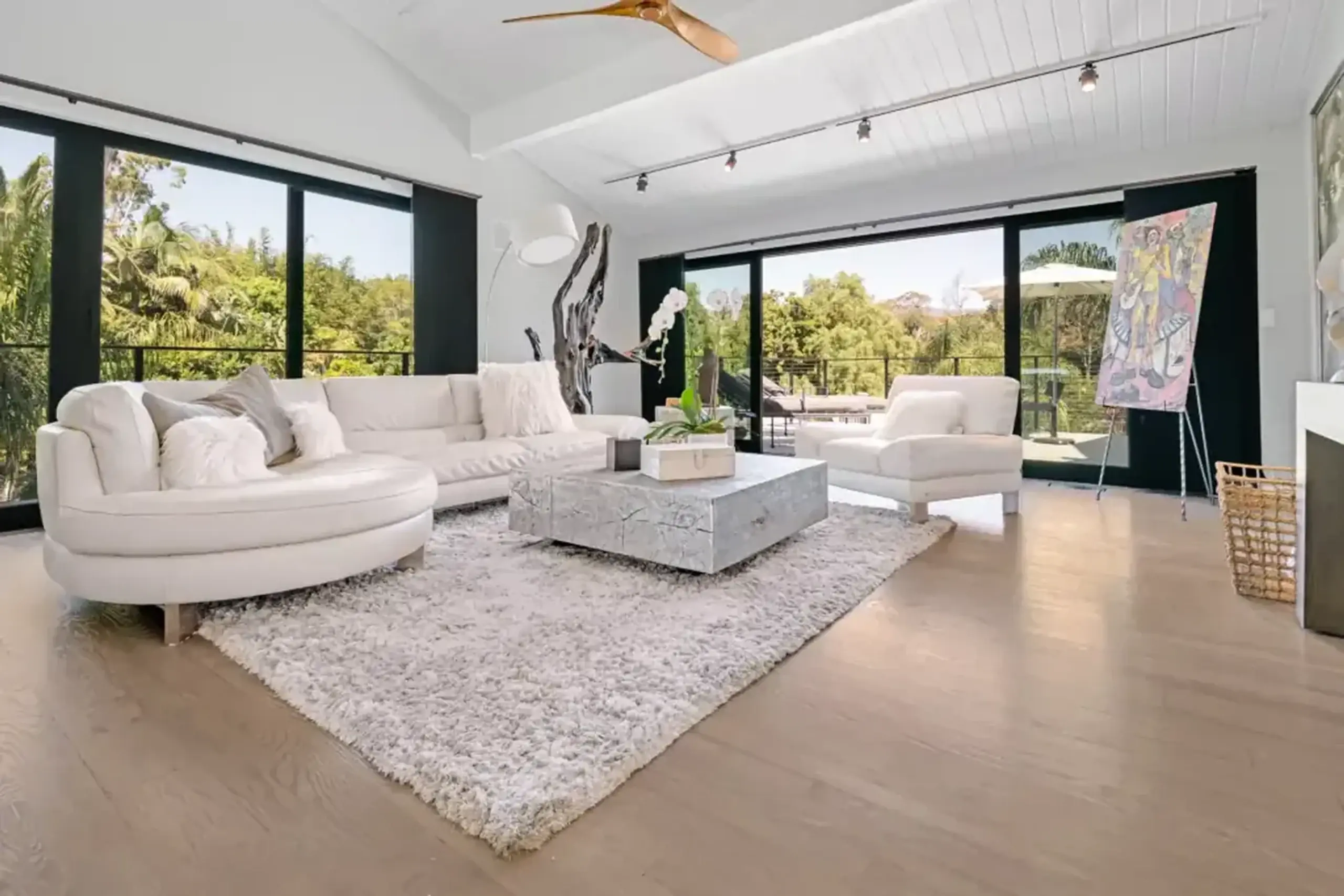
Amend Malibu
Pictured: Amend Malibu, Malibu↗
The threshold
The week has stopped working.
Most people who end up looking at residential care for anxiety have been managing for years, competently, and the searches begin when management stops being enough. The markers are rarely dramatic. The map of places you will go has quietly shrunk. Sleep has not held for months and the mornings have started arriving with dread already in place. The medication has been adjusted twice by a doctor who sees you for twenty minutes every six weeks. Or a drink after work became two, then became the mechanism.
What a residential month buys is not luxury, whatever the photographs suggest. It buys density: a full clinical team, daily contact rather than weekly, a psychiatrist reachable in the same building, and thirty days with nothing to manage except the treatment. That is the thing an hour a week cannot deliver, and it is the only honest reason to spend what this costs.
What separates programmes
Ask about the therapy, not the grounds.
Cognitive behavioural therapy is the first-line evidence-based treatment for anxiety disorders.1A serious programme will tell you how many individual CBT sessions a week it runs and who delivers them — a licensed therapist with anxiety-specific training, or whoever is on the rota. The second question is psychiatric contact, because medication for anxiety is often the part that needs closest watching: how often will you see the psychiatrist, in what setting, and who adjusts a dose when something is not working.
The third question is the admission itself. Most residential programmes admit for substance use and treat anxiety as a co-occurring condition — the clinical week is built around recovery from drinking or drugs, with psychiatric care layered on. A smaller group admits for the anxiety disorder as the reason itself, which means the treatment plan starts there. Amend Malibu is the one we catalogue in depth on that shorter list: two houses of six guests each with a full clinical team, care led by board-certified psychiatrist and medical director Dr. Robert Feeley with clinical director Shira Rebibo, LMFT, Joint Commission accredited, 4.6 across 65 Google reviews transcribed 31 July 2026.2 The residence is $90,000 for thirty days.3
The line
A retreat is not treatment.
Anxiety is the condition where the retreat industry and the treatment industry blur most, because both promise calm and both photograph beautifully. The distinction is not atmosphere. It is whether a licensed clinical team is responsible for your day: a psychiatrist, a treatment plan, medication management, and someone accountable if the week goes badly. A retreat has none of those and does not claim to. For a stretch of stress that is often enough. For a diagnosed anxiety disorder it is a holiday with better lighting. Our guide comparing retreats with residential treatment maps exactly where the line falls.
The honest paragraph
Who a residential month is wrong for.
If the anxiety is real but the week is still functioning, a good outpatient psychiatrist and a CBT-trained therapist are the right first move, and a residential month is an expensive way to skip a step that usually works. If someone is in crisis today, the answer is 988 or an emergency room now, with residential care after stabilisation rather than instead of it. And if the budget is insurance-led rather than private-pay, this tier is the wrong shelf entirely — findtreatment.gov lists licensed programmes across every payment type, and nobody should mortgage a house for a first residential stay.
Common questions
Asked before the first call.
When does an anxiety disorder need residential treatment?
What does a strong residential anxiety programme look like?
Which centres admit for anxiety itself?
What does residential anxiety treatment cost?
Is a retreat a reasonable alternative?
If you are trying to work out whether this is the month to go, or which of two programmes actually treats anxiety rather than accommodating it, . We will tell you honestly what fits, including when the answer is a better outpatient team rather than a bed.
Amend Malibu is a featured partner of LuxuryRecovery.
Maui Recovery is a featured partner of LuxuryRecovery.