Amend Malibu
Residential mental health · Malibu
Luxury mental health facilities in Malibu.
By the LuxuryRecovery Editorial Team2,100 words · 9 min read
In short
Most Malibu programs are substance-use rehabs that also handle mental health. Amend Malibu is built the other way around: depression, complex trauma, bipolar, and personality disorders are the admission, in two houses capped at six guests each, with Joint Commission accreditation and a clinical team led by psychiatrist Dr. Robert Feeley, MD, that publishes up to five individual therapy sessions and a psychiatry appointment every week. For serious mental health care in a private residential setting on this coast, it is where we’d start.
One program to consider: Amend Malibu
Amend Malibu is a featured partner of LuxuryRecovery.
Where we’d start
Why Amend Malibu leads this page.
Amend Malibu is a mental-health-primary residential program on the Malibu coast: two houses capped at six guests each, treating depression, complex trauma, bipolar and personality disorders as the reason for admission rather than as conditions accompanying a substance problem. Three Malibu programs admit this way. Amend is the one we would start with, for four reasons a family can check.
The smallest published intake in Malibu
Six guests per house, across two houses: the smallest published intake we have verified in Malibu.
The only confirmed rate of the three
$90,000 for thirty days, confirmed by Amend's own admissions.
Joint Commission accredited
The accreditation standard that hospitals are held to, alongside NAATP membership — verified, not self-declared.
Admits for the psychiatric condition itself
You do not need an addiction to be admitted. For a family whose problem is a depression that has not lifted, that is the whole distinction.
Amend’s scope is mood, trauma and personality work, admitting once withdrawal management is complete. If detox or eating-disorder care with supervised meals is the admission you need, say so when you write and we will point you to the right place.
Amend Malibu
Serious mental health care, six guests per house.
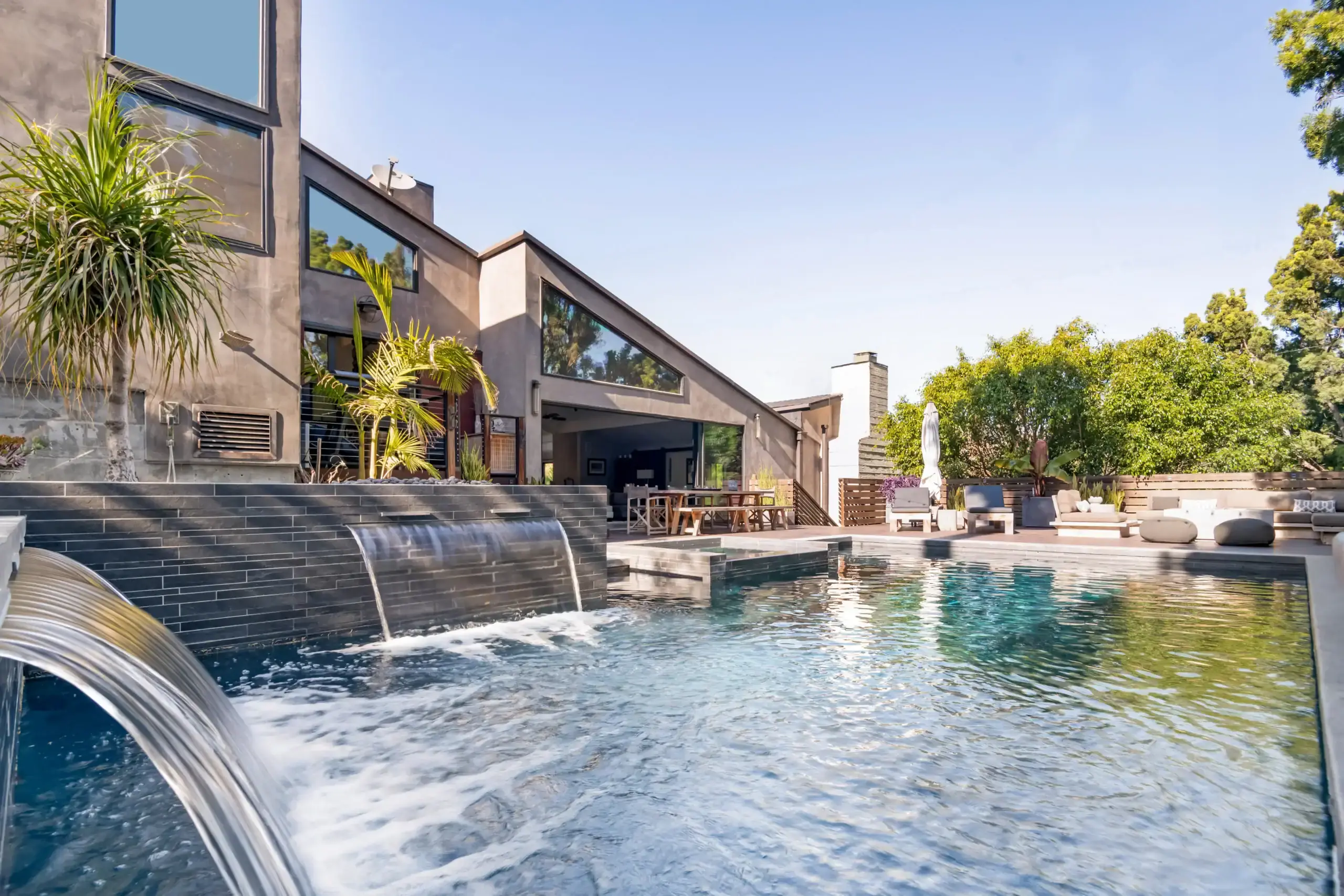
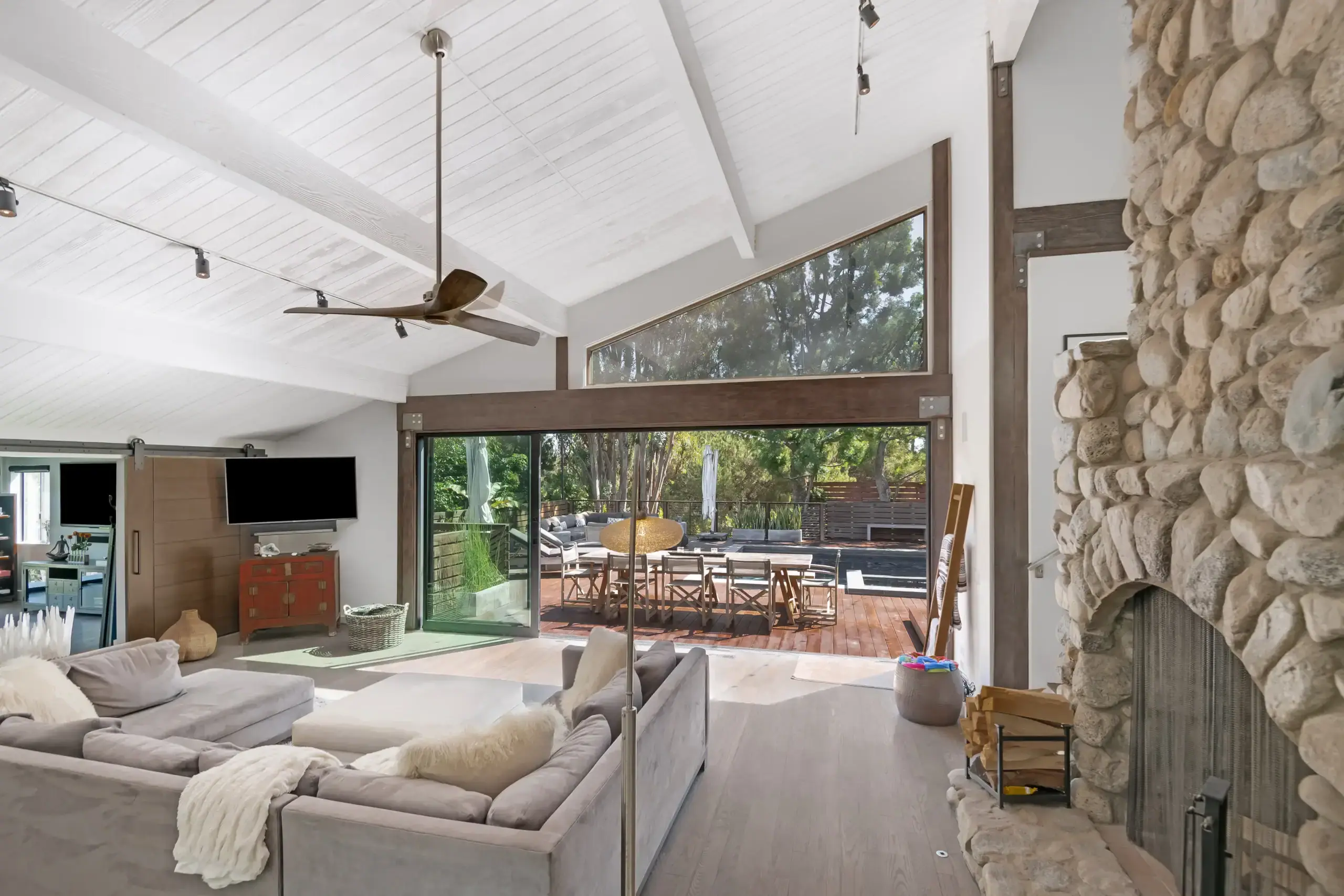
Two houses above the coastline, Wildlife and Portshead, each capped at six guests with its own clinical team. The focus is complex trauma, depression, anxiety, bipolar, and personality disorders, with capacity for co-occurring substance use. The team is led by a board-certified chief psychiatrist and a licensed clinical director, with trauma-trained and DBT-trained therapists on staff. Joint Commission accredited. Google rating 4.6 across 65 reviews, checked 31 July 2026 — the live figure is on Amend’s Google listing.
Amend Malibu is a featured partner of LuxuryRecovery.
Malibu is known for rehab. Mental health care is a quieter story.
The numbers make the point: of the nine Malibu-coast programs we compare by name below, three can admit you for the mental health condition itself — Amend Malibu, Avalon Malibu, and the Beach Cottage at Seasons. The other six lead with substance use and treat mental health as a co-occurring condition. Search for luxury mental health facilities here and what you mostly find is rehabs with a mental-health tab.
Nearly every program on the coast leads with substance use and treats mental health as the thing that comes along with it. That works when addiction is the center of the problem. It fits less well when the real weight is a depression that won’t lift, trauma that has outlasted years of talk therapy, or a mood disorder that needs steady psychiatric hands and a calm place to settle a new medication.
A mental-health-primary program inverts the order. The condition is the reason you are there. The psychiatrist, the therapists, and the shape of the day are built around it, not bolted onto a substance-use curriculum. In Malibu, the clearest example is Amend; our national mental health coverage tracks the same kind of program in other regions, and our ranking of the best luxury mental health facilities sets Amend beside the strongest of them nationally.
If you are searching from Los Angeles
Malibu is Los Angeles County. It is about thirty miles up the coast from Santa Monica, roughly an hour from downtown in traffic that rarely cooperates. Anyone searching for an inpatient mental health facility in Los Angeles is already looking at this coastline, whether or not the search said so.
The city and the coast answer different needs, and it is worth being straight about which is which. Inpatient psychiatric care inside Los Angeles proper is mostly hospital-based: units attached to a medical center, built for stabilization and acute risk, and measured in days. Beneath that sits a deep layer of outpatient and intensive-outpatient programs you can attend while living at home. Both are the right answer for a lot of people, and neither is what this page is about.
What the coast adds is the tier in between: residential mental health treatment measured in weeks rather than days, in a house rather than a ward, with the same psychiatrist and the same clinical team through the whole admission. That tier is small here. Of the nine Malibu-coast programs we compare by name, three can admit for the mental health condition itself. If proximity to the city matters more than distance from it, an intensive outpatient program in Los Angeles will serve you better than a residential bed forty minutes up the Pacific Coast Highway, and it is worth saying that before you tour anything.
Beyond Los Angeles County, our California directory covers the rest of the state, including the Bay Area programs that suit someone who wants Northern California instead.
Who treats you
The clinical teams, by name.
In a six-person house, the people matter more than the property. Amend Malibu’s care is led by Dr. Robert Feeley, MD, a psychiatrist and its Medical Director, with Dr. Daniel Hai, PsyD, a clinical neuropsychologist, and Shira Rebibo, LMFT, as Clinical Director. Its published program includes up to five individual therapy sessions a week, weekly psychiatry appointments and family support sessions.
| Program | Clinical leadership named | Nursing and medical | Published clinical week |
|---|---|---|---|
| Amend Malibu | Dr. Robert Feeley, MD (Medical Director, psychiatrist); Dr. Daniel Hai, PsyD (clinical neuropsychologist); Shira Rebibo, LMFT (Clinical Director) | Rachael Boughton, RN; Kyung Hwang, AGACNP-BC, FNP-BC, an acute-care nurse practitioner | Up to five individual therapy sessions a week, weekly psychiatry, family support sessions |
| Avalon Malibu | Team detail on the program’s own site | 24/7 on-site nursing; 6:1 staff-to-client ratio | Two oceanfront estates, six private suites each |
| LifeSync Malibu | Team detail on the program’s own site | Psychiatric evaluations and testing | Individual therapy, DBT and group therapy |
Programs publish different things, so the table is a starting point, not a scorecard. Four questions put every Malibu program on the same footing in one phone call:
- Who is my psychiatrist, and how many times a week will I see them?
- How many individual therapy hours will I have each week, and with whom?
- Who is on site overnight, and what happens if I need medical care at 2 a.m.?
- Is psychological or neuropsychological testing part of the first weeks?
Amend’s full team, with photographs, is on its profile, and our review of Amend Malibu covers the clinical week in more depth.
Compared honestly
How Malibu’s programs actually differ.
Every program on this coast is good at something specific. The honest way to choose is to match what you are carrying to what each house is built for — and to know, before you call, which ones treat mental health as the admission itself and what a month actually costs. Published and reported figures below are as of July 2026; full sourcing is on our cost page.
| Program | Built around | Mental health as the admission? | What the program publishes |
|---|---|---|---|
| Licensed to admit for mental health itself | |||
| Amend Malibu | Psychiatry-led mental health care, six people per house | Yes — no substance diagnosis required | $90,000, confirmed by the program2 |
| Avalon Malibu | Mental health and substance treatment under one licence, on a residential campus | Yes — states it is qualified to treat psychiatric illness as the primary diagnosis3 | Not published. A directory carries an undated estimate for the residential programs generally4 |
| Seasons in Malibu | Substance recovery, plus a separate mental-health-only cottage | Yes — its Beach Cottage is a stand-alone facility “strictly dedicated to mental health treatment”5 | The Beach Cottage publishes no rate. Seasons in Malibu lists a private-pay range, and two directories disagree on it67 |
| Built around substance recovery | |||
| Passages Malibu | Non-12-step substance recovery | Alongside substance use | ~$95,000, reported estimate8 |
| Cliffside Malibu | Substance recovery, working with many commercial insurers | Alongside substance use | $30,000–$91,000, reported estimate9 |
| Carrara Treatment | Substance recovery at the highest amenity tier | Alongside substance use | Up to $165,000, per press coverage10 |
| Rise in Malibu | Detox and residential substance recovery | Alongside substance use | $90,000, published by the program11 |
| The Pointe Malibu | Substance recovery and chronic pain | Alongside substance use | ~$75,000+, reported estimate12 |
| Meadows Malibu | Substance recovery and trauma work | Alongside substance use | Not published; shared on inquiry13 |
Read the table the way an admissions director would. If drinking or drugs are the first problem, most of this coast is built for exactly that, and several of those programs are excellent. If depression, trauma, bipolar or a personality disorder is the first problem, the real shortlist is short: three houses can admit you for the mental health condition itself, and each is worth a call. Amend leads this page because both of its houses are built for that admission and nothing else — six guests each, psychiatry-led, no substance diagnosis required.
The conditions
What does Amend Malibu treat?
Depression
Residential intensity for depression that outpatient care hasn't lifted: daily therapy, psychiatric management, and a structured day that carries you when motivation can't.
Complex trauma & PTSD
Trauma-focused work (the evidence-based therapies, not amenities) in a low-stimulation setting with the privacy that hard processing needs.
Anxiety disorders
For anxiety that has narrowed a life, time away from the triggers plus daily clinical work to rebuild tolerance and function.
Bipolar
Mood stabilization overseen by a board-certified psychiatrist, in a residence calm enough to let a new medication regimen settle.
Personality disorders
DBT-trained clinicians and the consistency of a small, stable milieu, the conditions personality-disorder work actually requires.
Executive burnout
The depression and anxiety that arrive looking like exhaustion, in people whose work has been the last thing to break. Treated as the clinical picture it is, not as a holiday.
Co-occurring substance use
When a substance problem sits alongside the psychiatric one, both get treated together rather than sequenced — the dual-diagnosis case for a mental-health-primary program.
Amend also runs published programs for OCD, ADHD, panic disorder, social anxiety, postpartum depression, and the mood changes of perimenopause and menopause. We don’t hold a reference page on each of those, so they aren’t linked above — the program treats them regardless, and their admissions team is the place to confirm fit.
Anxiety, specifically
Luxury anxiety treatment, residentially.
Residential treatment for anxiety means living for a month in a place where the clinical work is daily rather than weekly: individual therapy most days, psychiatry inside the week rather than at ninety-day intervals, and a household small enough that a panic attack at dinner is met by staff who know your history. Anxiety disorders are the most common mental-health condition in the United States — NIMH puts past-year prevalence near one in five adults — yet almost no residential program takes anxiety as the admission itself. On this coast, Amend Malibu does: generalized anxiety, panic disorder, and social anxiety all appear on its published program list, at six guests per house.
The honest counterweight: most anxiety is treated well without anyone leaving home, through outpatient therapy and medication — residential is for the narrower case where the condition has stopped work or life and weekly care has not held it. If that distinction is the decision you are weighing, our guide to therapy, IOP, or residential walks the tiers plainly.
Amend Malibu
The money question
What it costs, said plainly.
Amend’s private-pay rate is $90,000 for a 30-day stay, which sits at the lower edge of Malibu’s six-guest tier, where a month runs roughly $90,000 to $130,000 and several programs decline to publish a figure at all. Insurance can carry real weight: Amend works with PPO plans that include out-of-network benefits, and verification happens before any commitment.
If this is your situation, here is what to do. Write down the two or three things that made you search tonight: the diagnosis if there is one, how long it has been bad, what outpatient care has already been tried. Call or write to Amend’s admissions team and say exactly that. Ask who the psychiatrist is, how many people share the house, and what a typical day looks like. Have your PPO card ready so they can verify out-of-network benefits before you commit to anything. And if substance use is the bigger problem, instead: a different Malibu program will fit better, and we will name it.
Not sure which program fits?
Tell us what the situation calls for: the diagnosis, how urgent it is, how far someone can travel. We'll point you to the program built around it. Including, when it's the honest answer, one we don't list.
Common questions
What families ask.
Is there a luxury mental health facility in Malibu?
What's the difference between mental health treatment and rehab in Malibu?
How much does luxury mental health treatment in Malibu cost?
Does luxury mental health treatment take insurance?
Is Malibu part of Los Angeles, and how far is it from the city?
Who leads clinical care at Amend Malibu?
Which Malibu mental health programs have nursing on site?
Who is residential mental health treatment in Malibu right for?
Some families arrive here picturing a luxury mental health retreat: rest, privacy, a residential pace. Malibu’s version of that exists, but the programs worth the fee pair the setting with board-certified psychiatry and daily clinical work. Our mental health retreats guide covers the distinction in full.
To see the wider Malibu field, including the substance-use and dual-diagnosis programs, our Malibu directory lists every luxury program on the coast.
If you are trying to tell whether a mental-health-primary program or a dual-diagnosis one fits your situation, . We are reachable in confidence, and we will point you to the right fit even when it isn’t one of ours.
The library
Everything we’ve written, shelved.
This page anchors our Malibu mental health coverage. The pieces below go deeper on the place, the decision, and the conditions themselves — each one written to be read on its own.
Malibu, on the ground.
Depression, trauma & bipolar, compared
What each Malibu program publishes for the three conditions people actually admit for.
Depression treatment in Malibu
What comes after the fourth medication: TMS, Spravato, and who delivers them on site.
Trauma & PTSD treatment in Malibu
Who publishes EMDR, and the question that reveals how deeply a program staffs it.
Bipolar treatment in Malibu
Psychiatric continuity, intake size, and the boundary where a hospital comes first.
What mental health care costs in Malibu
The three mental-health-primary programs priced side by side, every figure sourced.
Executive rehab in Malibu
The programs that admit for burnout and depression rather than substance use, and what an executive track actually buys.
Top 5 luxury rehabs in Malibu
The ranked editorial: privacy architecture, intake size, and who leads the coast.
What Malibu's rehabs actually rate
Every program's live Google rating transcribed side by side, 4.8 down to 4.0.
What Malibu rehab costs
The published numbers, what the monthly fee covers, and where insurance fits.
Amend Malibu, reviewed
The full editorial review of the program that leads this page.
Phone & laptop policies
Which houses let you keep working, and what each policy asks of you clinically.
How Malibu programs feed you
Private chefs and dietitians as clinical infrastructure, not amenity.
Where famous people actually go
The Malibu names and the machinery of discretion around them.
When Malibu is the wrong call
The honest cases for staying closer to home, or going further away.
Choosing residential care.
Residential mental health, not rehab
The category explained: what a mental-health-primary admission actually means.
Retreat or residential?
Where the wellness week ends and clinical care begins.
Therapy, IOP, or residential
The three levels of care and the honest thresholds between them.
A day in residential treatment
The actual schedule, hour by hour, inside a house like Amend's.
Getting someone in
The admission path when it's your person who needs the care, not you.
The private alternative to a psych ward
Voluntary residential care when the hospital is the wrong container.
After the hospital
The step-down decision that follows a mental-health hospital stay.
Your therapist said residential
What that recommendation means and how to act on it.
The best luxury mental health facilities, ranked
The national field, ranked on clinical depth rather than photography.
The conditions, treated.
Depression, treated residentially
When outpatient care hasn't lifted it: what residential intensity adds.
High-functioning depression
The version that hides inside a working life, and when it warrants treatment.
Executive depression
Depression at the top of an organization: privacy, continuity, treatment.
Bipolar, stabilized properly
Why medication changes settle best inside a residential month.
PTSD, treated in private
The evidence-based trauma therapies and the settings that deliver them.
Complex trauma, residentially
Long-pattern trauma work and the stability it requires around it.
Burnout that needs treatment
When exhaustion is a clinical picture rather than a vacation deficit.
Residential care for professionals
Licensure, confidentiality, and returning to work: the professional's questions.